Is Pilates Strength Training? Here's What the Research (and Reality) Says
If you've ever wondered whether Pilates "counts" as strength training, you're not alone. The honest answer is more nuanced than yes or no.
If you've ever wondered whether Pilates "counts" as strength training, you're not alone.
One of the biggest misconceptions about Pilates is that it's either "just stretching" or completely separate from strength training. In reality, the answer is much more nuanced.
A well-designed Pilates class can absolutely make you stronger. The confusion comes from the fact that Pilates develops strength differently than traditional gym workouts.
If your definition of strength is lifting the heaviest possible weight one time, Pilates probably isn't the most direct route there. But if strength means improving muscular endurance, control, stability, coordination and the ability to move well under resistance, Pilates has a tremendous amount to offer.
The truth is that "strength training" isn't defined by barbells, dumbbells or gym equipment. It's defined by whether your muscles are working against enough resistance to adapt and become stronger.
Let's take a closer look.
What Pilates Strengthens Exceptionally Well
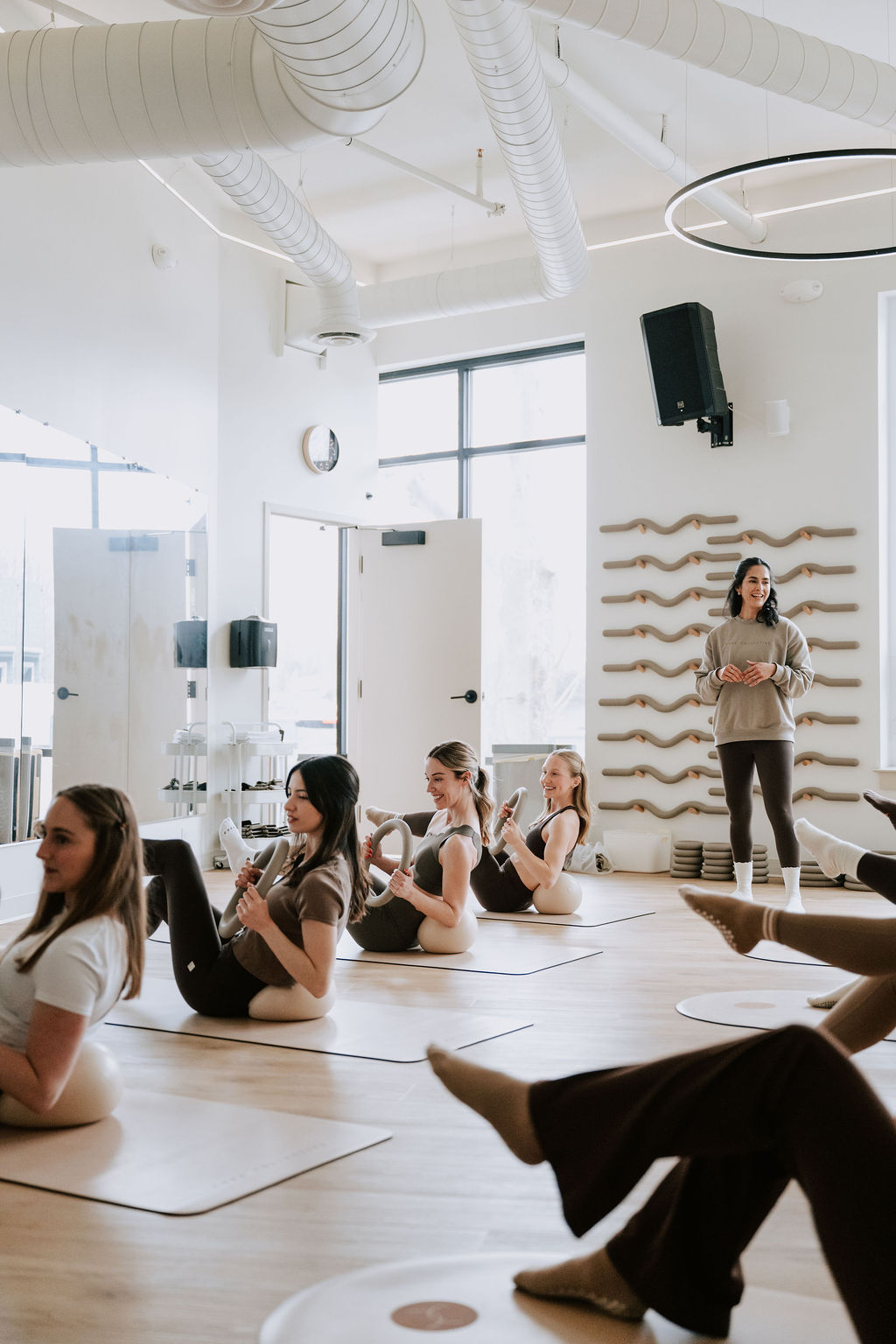
Pilates is a form of resistance training.
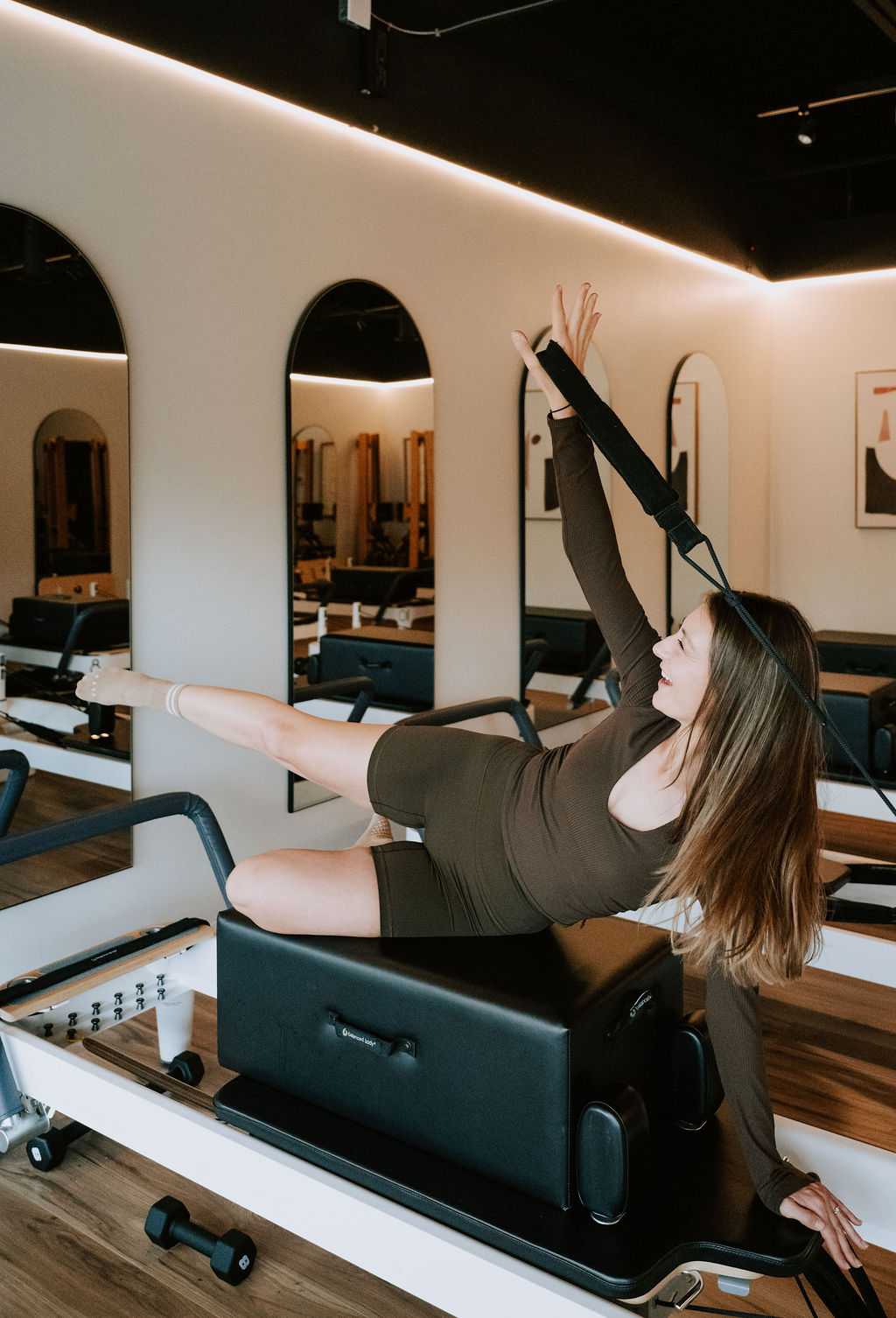
Every spring on the reformer, every bodyweight exercise and every controlled movement asks your muscles to generate force against resistance. Over time, that creates adaptations just like other forms of strength training.
Where Pilates particularly shines is developing:
- Core strength and trunk stability
- Hip and glute strength
- Shoulder stability
- Postural muscles
- Balance and coordination
- Single-leg strength
- Deep stabilizing muscles that are often overlooked in traditional gym programs
Unlike many workouts that isolate one muscle at a time, Pilates challenges your body to coordinate multiple muscle groups simultaneously while maintaining proper alignment.
That means you're not just getting stronger. You're also improving how efficiently your body uses that strength.
Muscular Endurance vs. Maximal Strength
One important distinction is understanding that there are different kinds of strength.
Maximal strength is your ability to produce the greatest possible force in a single effort. Think of a one-rep deadlift or squat.
Muscular endurance is your ability to repeatedly produce force over an extended period without fatiguing.
Traditional heavy lifting is generally better at improving maximal strength.
Pilates tends to excel at developing muscular endurance because you're often performing more repetitions with lighter resistance while maintaining excellent movement quality throughout the entire exercise.
Both qualities are valuable.
Being able to carry groceries, hike for hours, play with your kids, garden, ski or travel comfortably often depends just as much on muscular endurance as it does on maximal strength.
Why Pilates Feels Hard With Light Resistance
Have you ever noticed that Pilates exercises can feel surprisingly difficult despite using relatively light resistance? One reason is the way we control movement.
While Pilates is often associated with slow, deliberate exercises, not every movement is performed at a slow pace. Some exercises are quick and dynamic, while others are intentionally slowed down. What they have in common is that they're performed with control rather than relying on momentum.
That control often increases time under tension, meaning your muscles stay engaged throughout more of each repetition. Even during faster exercises, the emphasis is on precision, maintaining alignment and actively controlling both the effort and the return, rather than simply letting gravity or momentum do the work.
For example, moving the carriage with control requires your muscles to stay engaged through the entire movement instead of allowing the springs to pull you back.
The result is that your muscles often work harder than they would during a comparable movement performed with momentum, creating a training stimulus that's very different from simply moving heavier weights as quickly as possible.
Stability Changes Everything
Another reason Pilates feels deceptively difficult is that many exercises are intentionally unstable.
Whether you're standing on one leg, moving on a reformer carriage or controlling springs that constantly change tension, your stabilizing muscles have to work continuously.
Rather than simply pushing against resistance, you're also resisting rotation, maintaining alignment and coordinating movement throughout your entire body.
This improves:
- Balance
- Joint stability
- Body awareness (proprioception)
- Coordination
- Movement efficiency
These qualities become increasingly important as we age and are often undertrained in traditional strength programs.
Where Pilates Has Limitations
Pilates is excellent, but it isn't designed to accomplish every training goal.
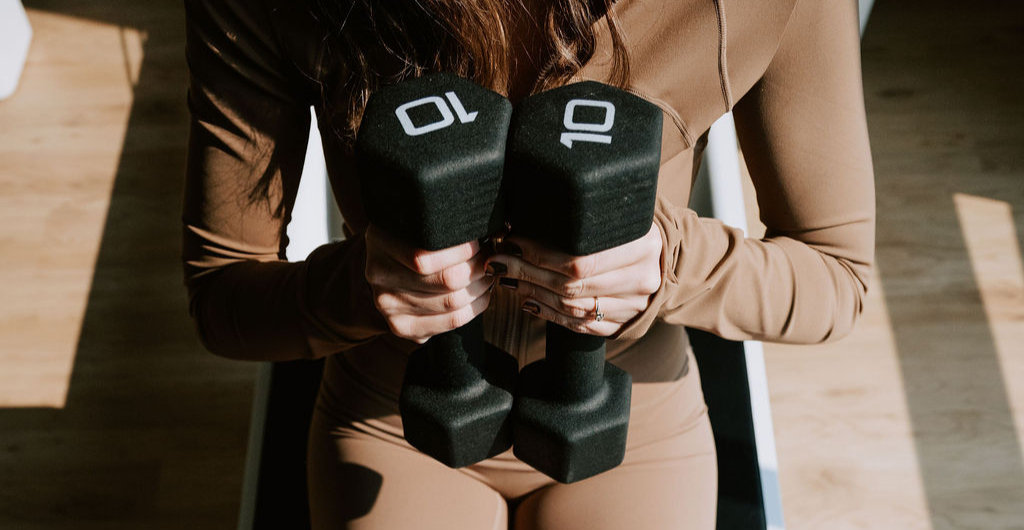
If your objective is to maximize muscle size or dramatically increase your one-repetition maximum on major lifts, progressively heavier resistance becomes increasingly important.
Our muscles continue adapting when they're consistently challenged with greater loads over time, a concept known as progressive overload.
While reformers and springs provide meaningful resistance, there is ultimately a ceiling to how much external load they can provide.
That doesn't mean Pilates stops being effective. It simply means that very advanced strength goals often benefit from additional resistance training with heavier weights.
Why Combining Pilates and Traditional Strength Training Works So Well
For many people, the best answer isn't choosing one or the other.
It's combining both.
Traditional strength training helps develop maximal strength, bone density and muscle mass.
Pilates helps improve movement quality, mobility, stability, muscular endurance, coordination and body control.
Together, they complement one another remarkably well.
In fact, many athletes, runners, golfers, cyclists and weightlifters regularly use Pilates specifically because it improves the quality of their movement, helps address muscle imbalances and may reduce injury risk while supporting their primary training.
Looking for More Traditional Strength Training?
At Core Collective, our signature reformer classes build meaningful strength while also improving mobility, stability, balance and control.
For clients who want even more of a traditional strength training experience, we also offer Core Circuit.
Core Circuit combines functional strength exercises with Pilates-inspired movement patterns, using our Amp cable machines.
It's an excellent complement to our reformer classes and a great option for anyone looking to lift heavier while still prioritizing quality movement.
Many of our members enjoy incorporating both into their weekly routine.
The Bottom Line
At Core Collective, we tend to think less in terms of "Pilates vs. strength training" and more in terms of building resilient, capable bodies that can move well for decades to come.
Pilates absolutely builds strength. It simply develops it in a different way than traditional weightlifting.
The strongest bodies aren't necessarily the ones that can lift the most weight. They're the ones that can generate force, control movement, maintain balance, recover well and continue doing the activities they love throughout life.
Whether your goal is lifting heavier, preventing injury, keeping up with your kids or simply feeling stronger in everyday life, the best exercise program is one you'll enjoy enough to do consistently.
And if you can combine the best of Pilates with dedicated strength training, even better.
Keep going
- Core Circuit strength
Functional strength on the Amp cable machines at Plymouth Road.
- Class formats
What each class on the schedule actually involves.
- Memberships & pricing
Session plans that let you combine reformer and strength each week.