Reformer vs. Mat Pilates: What's the Difference?
Both use the same principles. The difference is where the resistance comes from - and what that changes for a beginner.
If you're new to Pilates, the first decision usually isn't which studio to visit - it's which kind of class to book. Reformer or mat?
They come from the same method and follow the same principles: controlled movement, breath, alignment and working from your center outward. What changes between them is the equipment, and therefore where the resistance and the support come from.
What is mat Pilates?
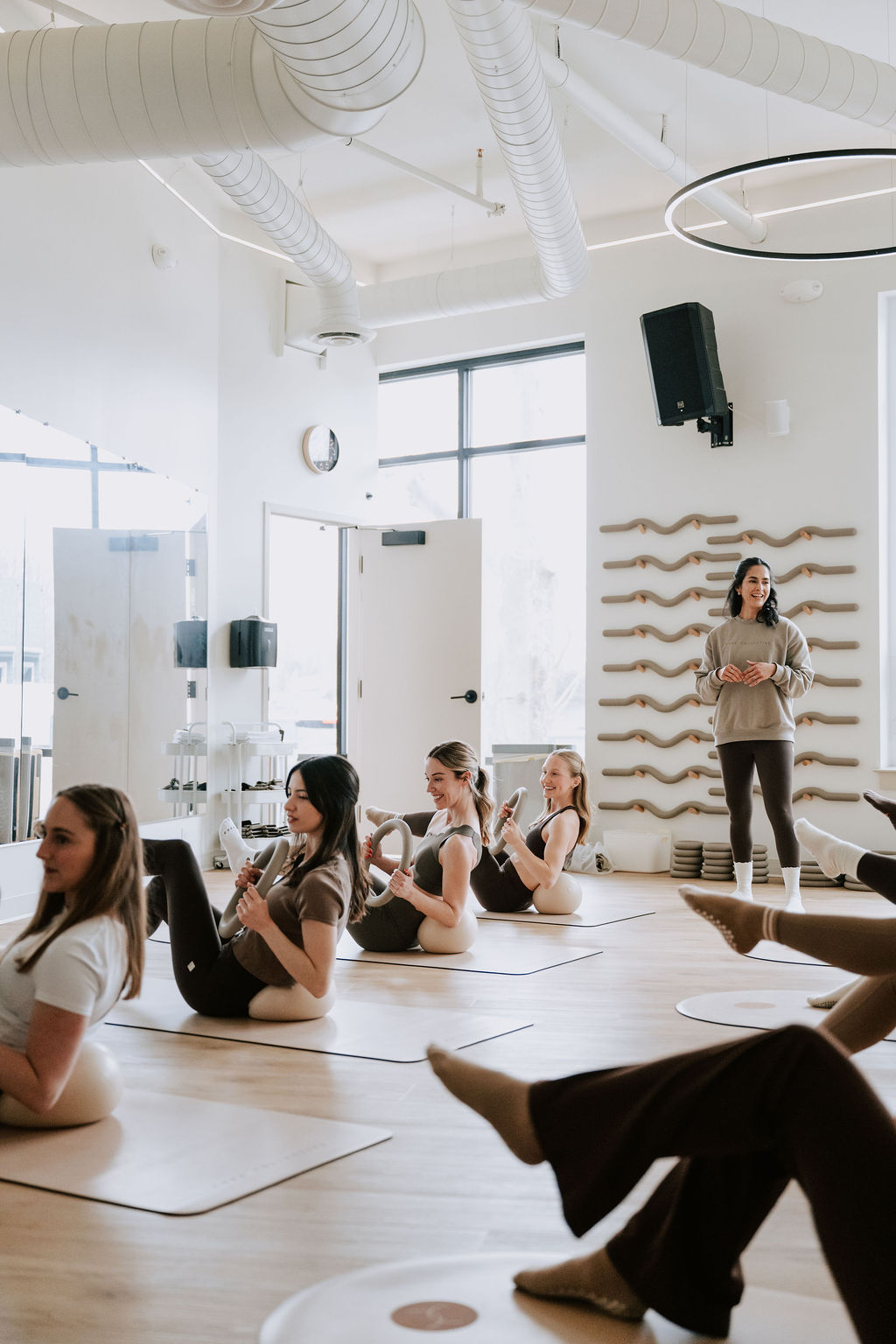
Mat Pilates is done on the floor, using your own body weight as the primary source of resistance. Classes often add small props - a ring, light weights, a ball, a resistance band - but the mat itself is the whole setup.
Because there's no machine guiding you, your body has to do the organizing. You're holding your own alignment, managing your own range of motion and deciding how far into a movement you can go with control.
What is reformer Pilates?
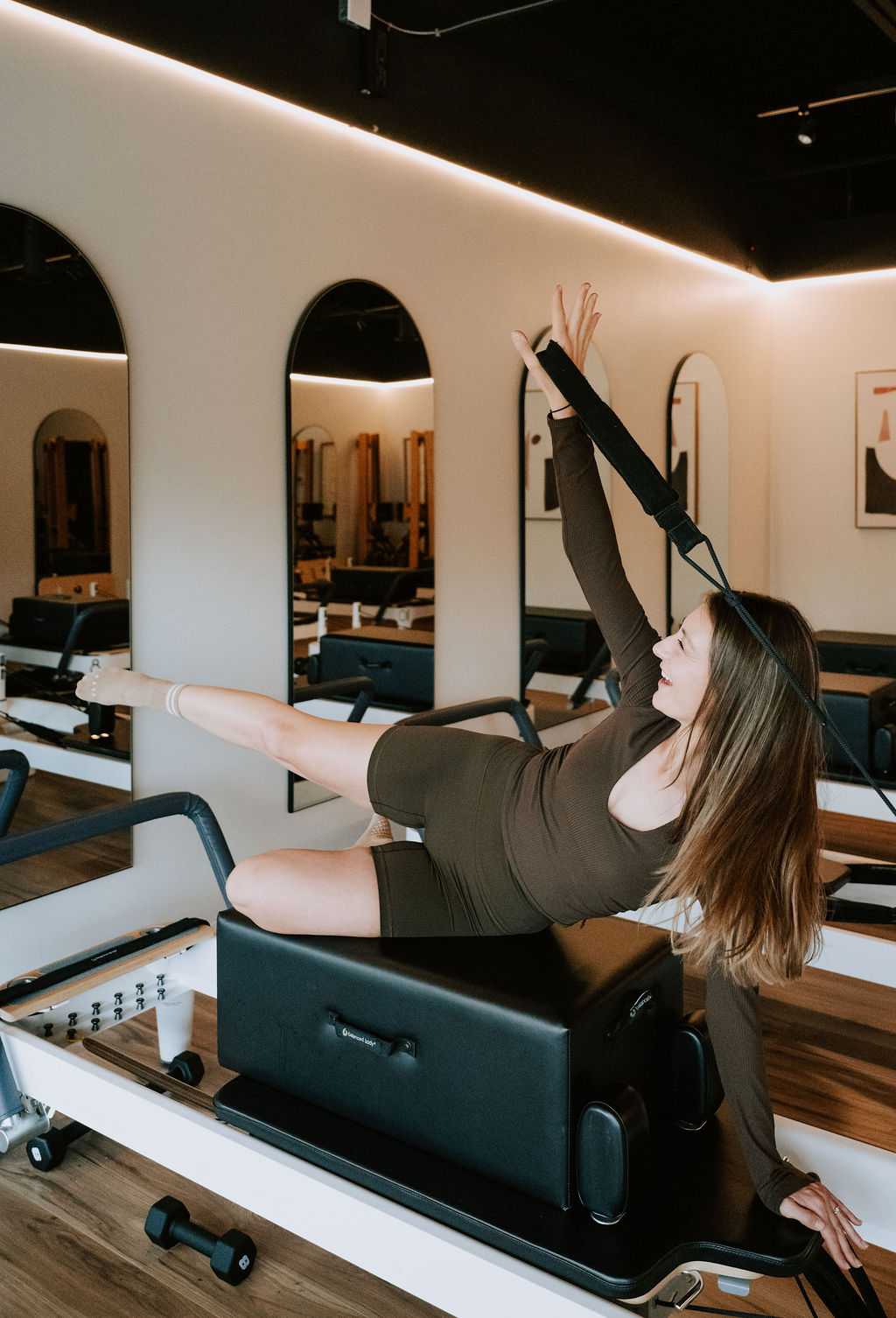
Reformer Pilates uses a sliding carriage attached to a set of springs. You push, pull and stabilize against those springs while lying, sitting, kneeling or standing on the machine.
The reformer also gives you feedback. The carriage moves when you're uneven, the footbar and straps give you something to reference, and the springs can either add load or take load away depending on the exercise.
How the resistance differs
On the mat, resistance is fixed: it's you, gravity and whatever prop is in your hands. You change the challenge by changing leverage - moving a limb further from your center, slowing a movement down, adding repetitions.
On the reformer, resistance is adjustable. Springs can be added or removed between exercises, which means the same movement can be made harder or easier in seconds.
One detail that surprises most beginners: on the reformer, lighter springs are often harder. With less spring support, you have to do more of the stabilizing yourself.
Which one is harder?
There isn't a clean answer, and anyone who gives you one is oversimplifying.
Mat work can be relentless - long sequences of body-weight movement with nowhere to hide and no springs to assist you. Reformer work can load your legs, back and arms more heavily than a mat class ever will, and the moving carriage demands stability the floor doesn't.
What actually determines difficulty is the class format, the tempo, the instructor's programming and where you currently are in your own practice.
Strength, stability, mobility and control
Both formats train all four, with different emphasis:
- Strength - the reformer's springs let you progressively load a movement, so it's easier to keep increasing the demand over time.
- Stability - the mat asks you to stabilize with no external reference; the reformer asks you to stabilize on a surface that's actively moving.
- Mobility - straps, the footbar and spring support let you work into ranges on the reformer that can be hard to access on the floor.
- Body control - mat work exposes compensations quickly, because nothing is helping you hold the shape.
Which is easier for beginners?
Most people find the reformer a little more approachable at first, for two reasons. The springs can assist as well as resist, and the machine gives you clear physical landmarks - where your feet go, where your shoulders sit, how far the carriage travels.
Mat classes have a shorter learning curve in terms of equipment, but they ask more of your body awareness on day one. If you've never done Pilates, cueing like "engage your center" is easier to feel with spring feedback than without it.
That said, plenty of beginners start on the mat and do beautifully. It depends more on the class level than the equipment.
Is the reformer better for building strength?
For adding load in a measurable, progressive way - generally yes. Springs give you a dial to turn, and leg work in particular can get genuinely heavy.
But "better for strength" doesn't mean mat work is easy. A well-programmed mat class produces plenty of muscular fatigue; it just gets there through leverage, volume and tempo rather than added load.
Is mat Pilates worth doing without equipment?
Yes. Mat work is where the method started, and it remains the clearest way to learn how the exercises are supposed to feel in your own body.
It also travels. Once you know the repertoire, you can practice it in a hotel room or your living room, which makes it a useful complement to studio work rather than a lesser version of it.
Do you have to choose?
No - and most people who stick with Pilates end up doing both.
The reformer is a good place to build load and learn the shapes with support. The mat is a good place to test whether you actually own those shapes without it. They tend to make each other better.
How this works at Core Collective
We teach both. Our Reformer classes run throughout the week at both studios, and Core Mat is a props-based mat class on the same schedule. We also program stretch, cardio and strength formats, so a week can include several kinds of movement rather than one.
If you're not sure where to begin, Core Focus and Core Classic are the two Reformer formats we most often recommend for a first class.
New to the studio? Our new client page walks through what to bring, what to expect and how to book your first class at the intro rate.
Keep going
- New here? Start here
What to expect in your first class and how to book at the intro rate.
- Class formats
Reformer, mat, stretch, cardio and strength - what each one involves.
- Schedule
See which Reformer and mat classes are running this week.